
Editor's Note
Anders Brenna reached out just a couple of days after Fyringsvakta first appeared on Instagram. He was preparing for a solo expedition through the Northwest Passage and wanted to know if I could get a unit ready for him in time.
The Fyringsvakta he took with him was a first-generation model, built entirely by hand before laser-cut parts became part of the production process. A lot has changed since then, and the product has come a long way.
Anders was among the very first to put Fyringsvakta to a serious test in the field. His experiences and feedback have been invaluable in shaping the product into what it is today.
What follows is his account of 50 days in the Northwest Passage, using one of the very first Fyringsvakta units ever made.
Field report
Expedition and conditions
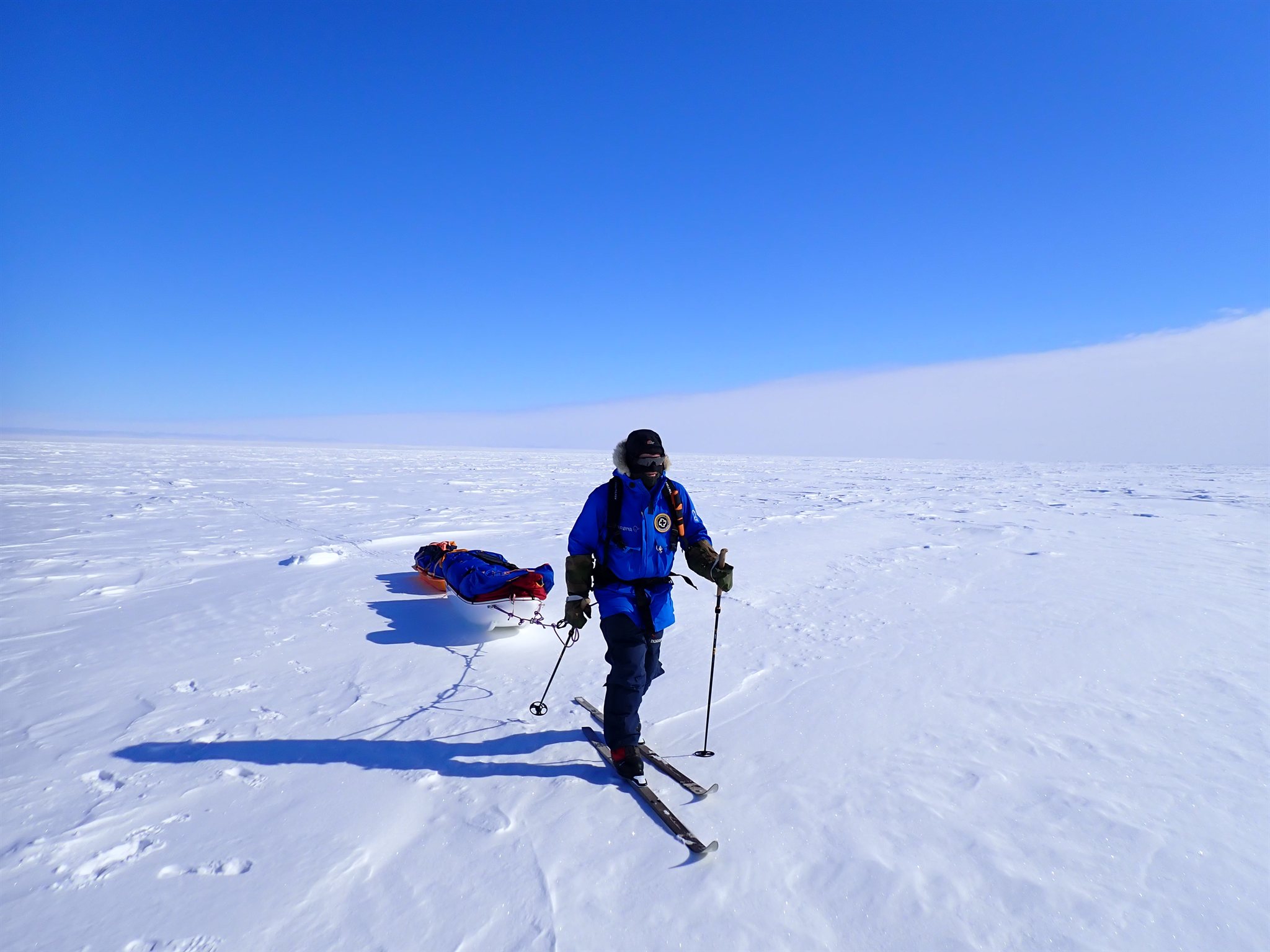
In the spring of 2025, I set out from Gjoa Haven in Nunavut, Canada. Ahead of me lay weeks of skiing through the Northwest Passage, pulling a pulk with a tent and everything I needed. I had long dreamed of a major expedition. As a father of two, with a station wagon, a semi-detached house and an office job back home in Oslo, I wanted to find out whether I could turn that dream into reality.
The trip was also a journey into polar history. I wanted to follow the sled tracks of the men from Roald Amundsen’s Gjøa expedition and bring attention to some of the names that rarely get the same recognition, among them Godfred Hansen and Peder Ristvedt.
In Amundsen’s time, the east coast of Victoria Island was unknown territory. British expeditions had already mapped the surrounding areas, but the east coast remained a blank space on the map. In the spring of 1905, Hansen and Ristvedt set off into the unknown to map this entire stretch of coastline. My plan was to follow their sled tracks. I wanted to understand the history by visiting the places and experiencing the distances, the weather and the hard work they must have put in.
For 50 days, I was alone with the daily tasks and decisions: finding my way, hauling the pulk, pitching the tent, staying warm, looking after myself and making good decisions as conditions changed. The people I met in Gjoa Haven also left a lasting impression. The Northwest Passage is a place with a rich history, but it is also home to people living their lives there today.
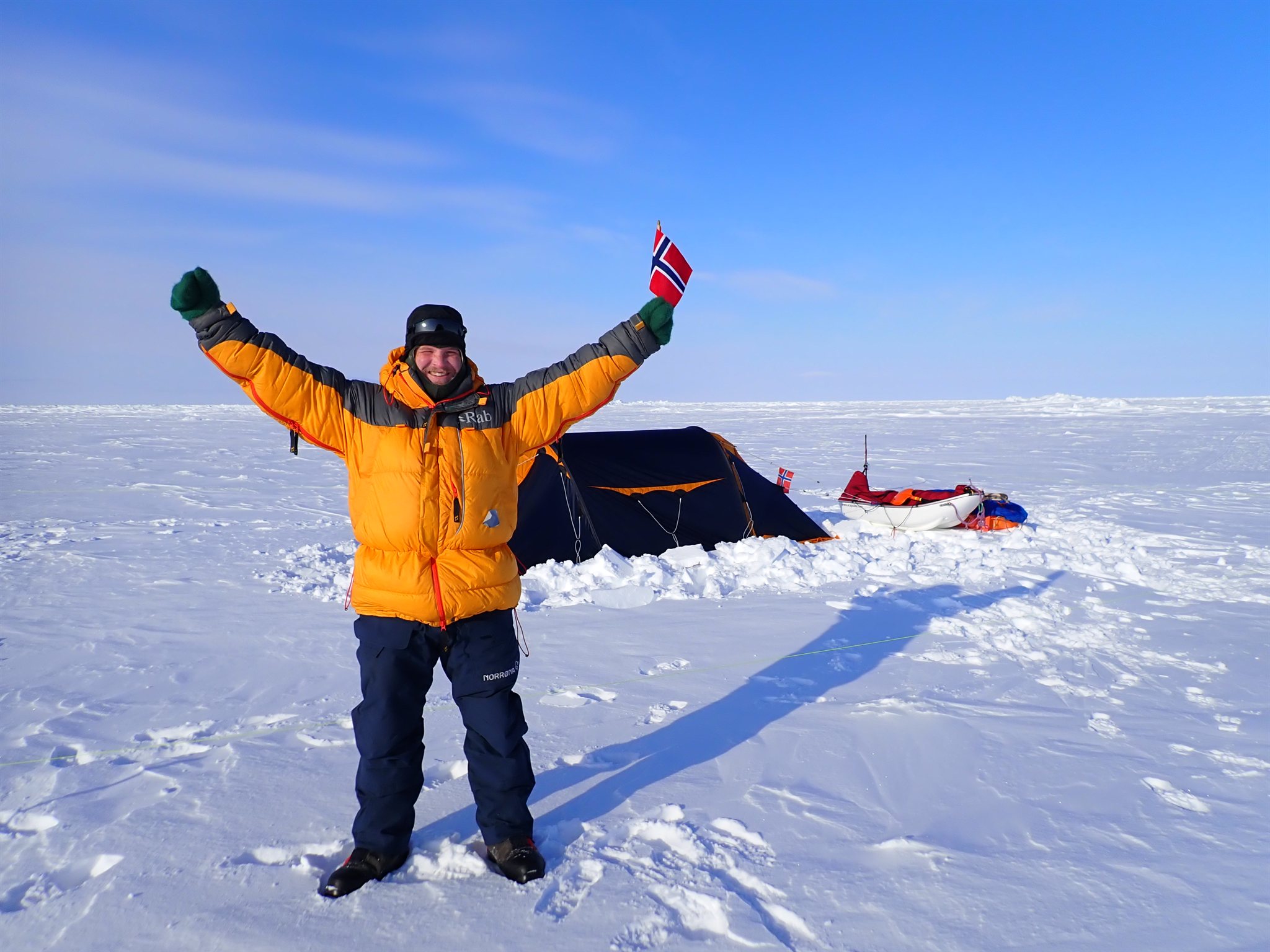
I didn’t get as far as I had planned. The trip became more than an attempt to reach a point on a map. It was about what happens when a dream meets reality, about taking responsibility for my own decisions and discovering what still matters when the plan has to change.
Setup and use
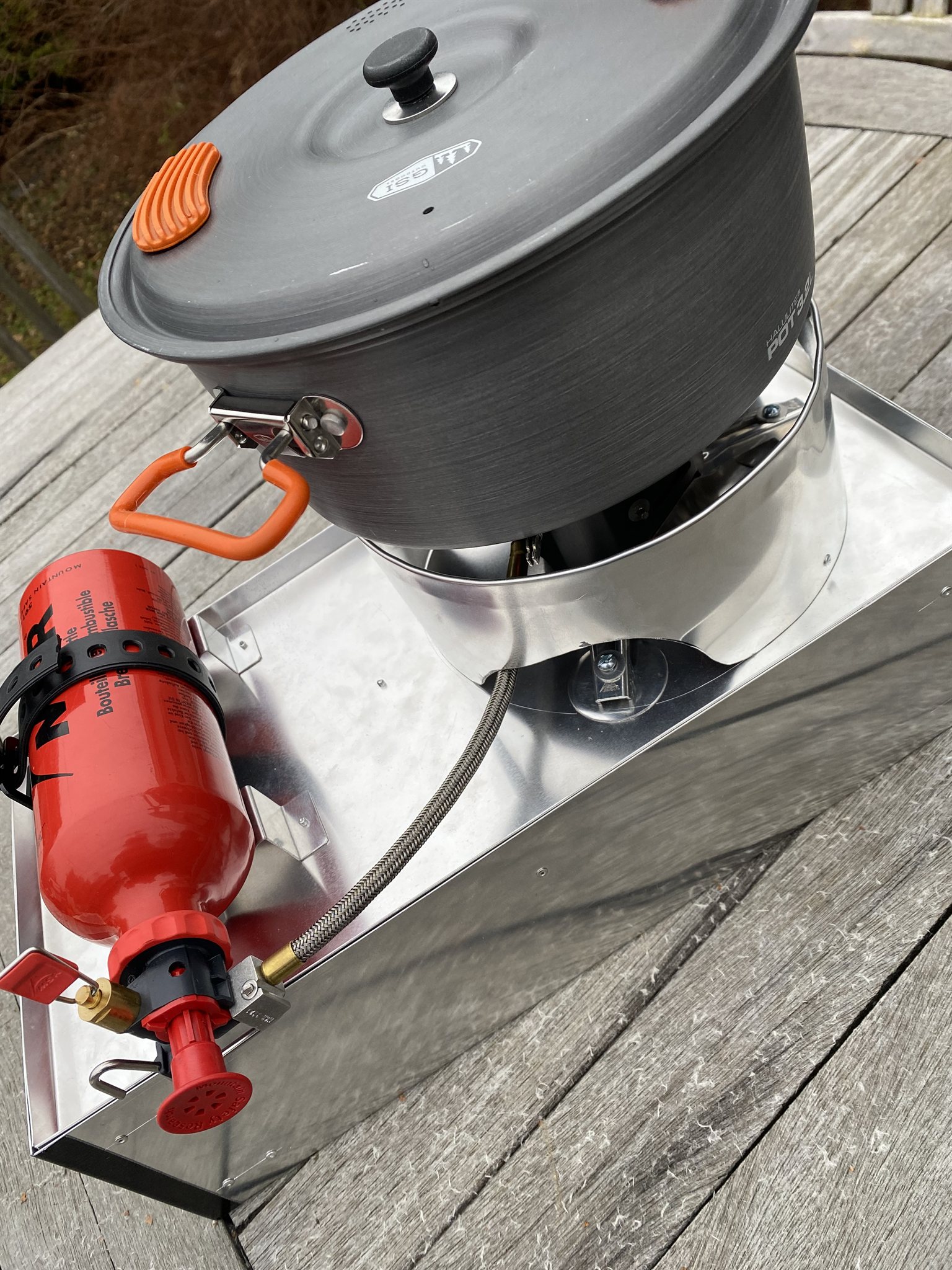
I used Fyringsvakta with an MSR XGK stove and a GSI Halulite 3.2 L pot. My tent was a Barents Outdoor South Pole 2 Polar. I mostly operated the stove in the vestibule but sometimes also inside the inner tent.
Before departure, I mounted and lit the stove, moved the setup around to check its stability. With the stove extinguished and the lid back on, I shook the box, sat on it, dropped it on the ground a few times and sprayed it with water. I also poured fuel into the bottom to simulate a spill. Then lit it again.
In use
Stability. The construction felt solid, and the stove mounts worked perfectly. The stove stayed in place throughout the trip, and I didn´t have to retighten the mounts.
Keeping the stove off the ground. Having the stove raised off the ground was practical during daily use, especially when camping on sea ice. The construction also protected the MSR XGK from impacts and pressure when packed.
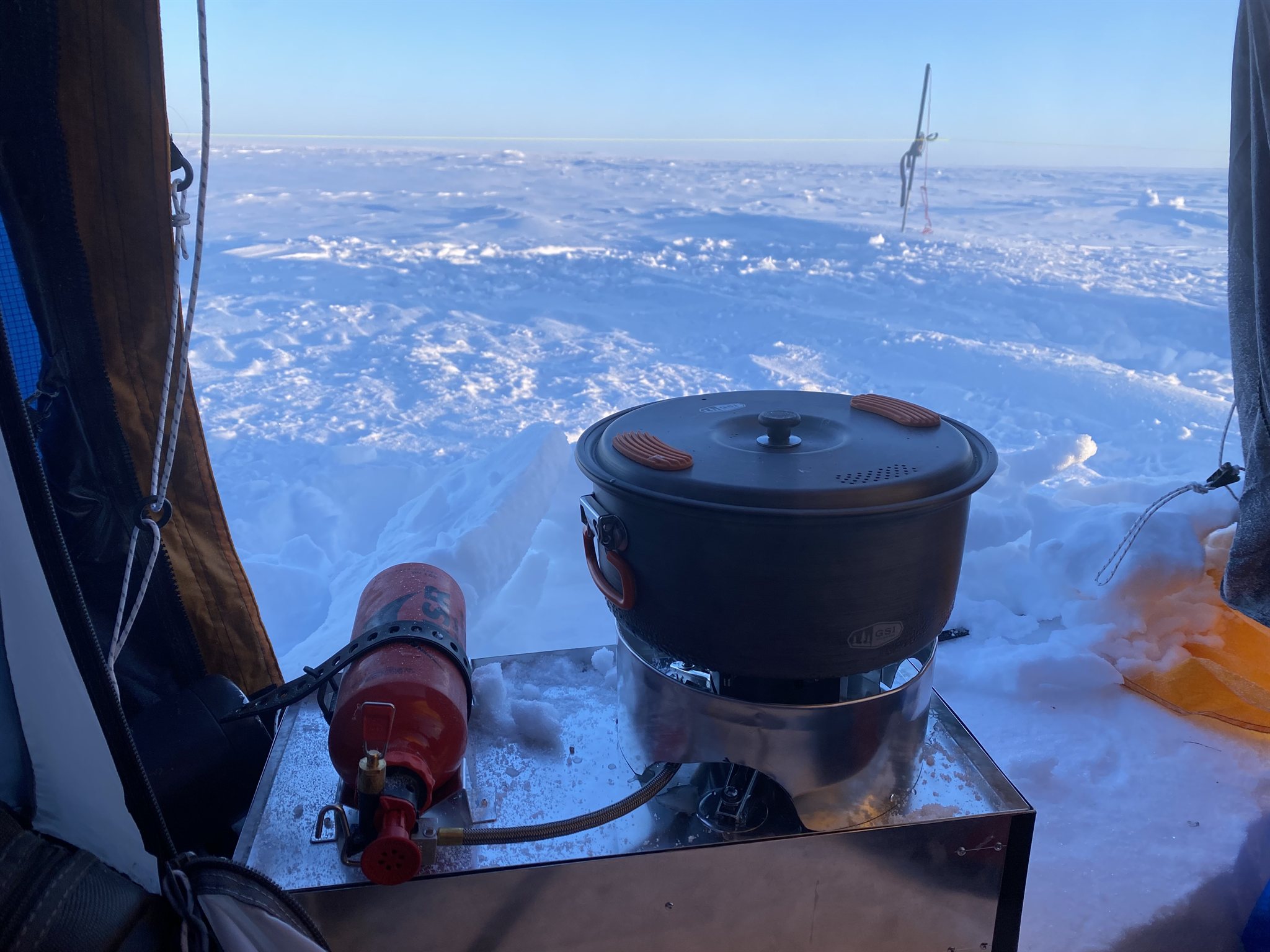
Avoiding fuel spills. Avoiding fuel spills and keeping potential spills under control was very important to avoid fire and getting fuel in my food or equipment.
Use with mittens. The setup was easy to handle without removing my mittens. I only had to open and flip the lid, instead of mounting the MSR XGK every day.
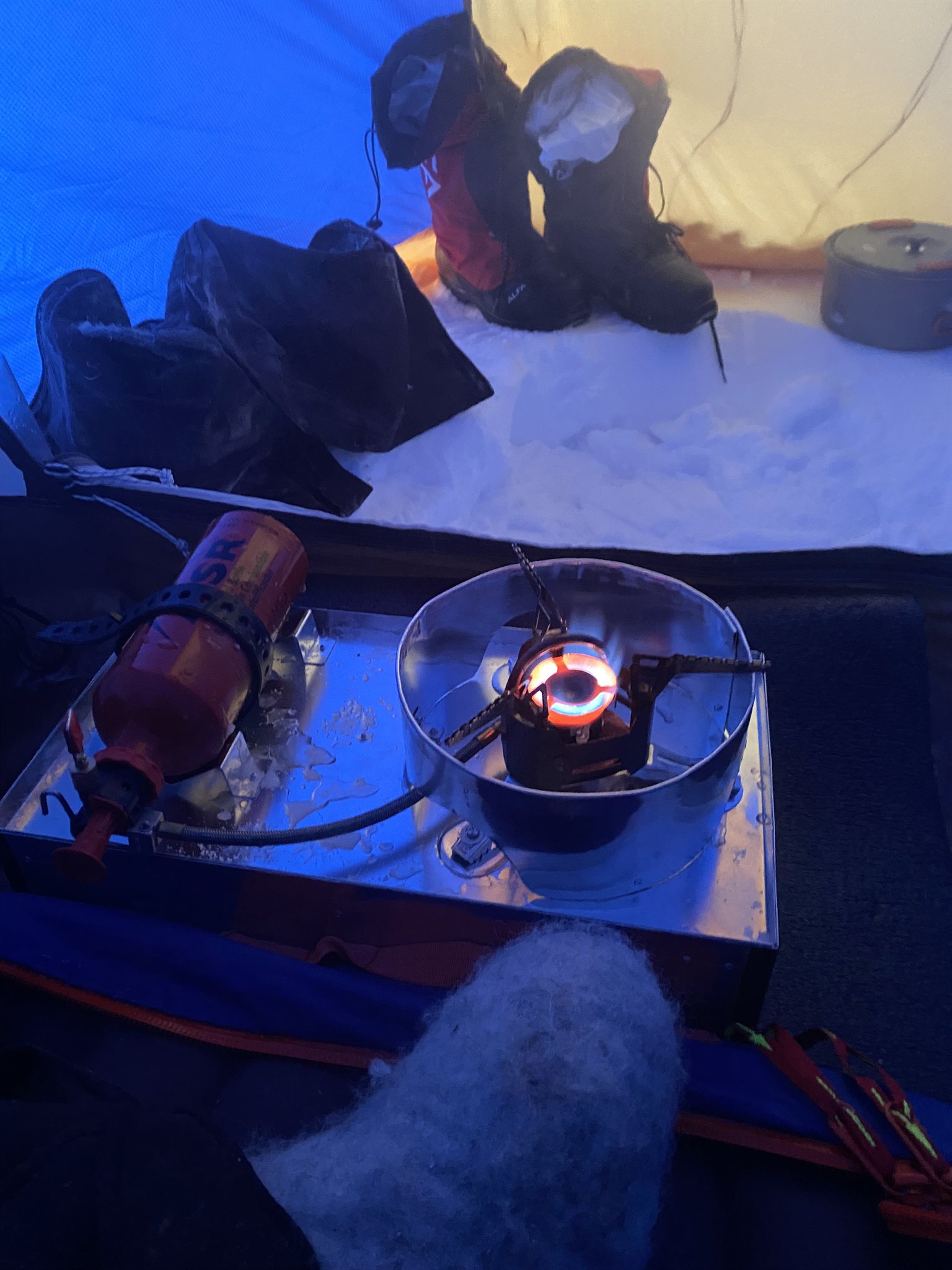
Safety when travelling alone. This was the biggest benefit for me. A stable stove and a setup that was straightforward to handle felt safe.
Overall assessment
Fyringsvakta worked really well over the 50 days. The main strengths were its stability, secure stove mounts, and ease of handling.